
How small delays turn into big problems on the production floor
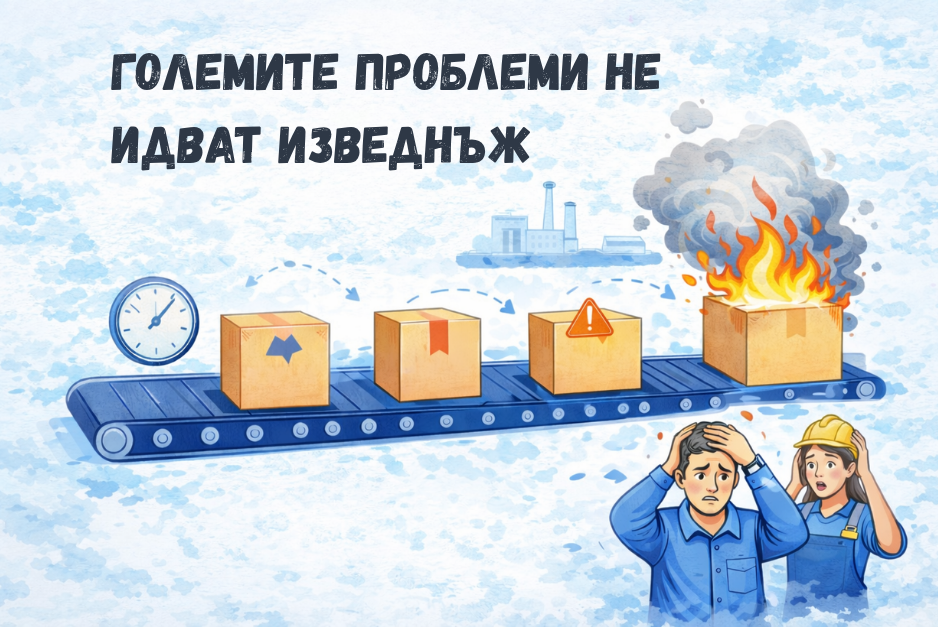
Small problems are the most dangerous
There is rarely one big problem that throws a production floor off.
More often there are many small ones.
A five-minute delay.
A material briefly missing.
A little confusion over priorities.
Nothing dramatic.
But when these small things repeat every day, they start to accumulate.
How it all starts
One operation runs late.
The next one waits.
The team gets reassigned.
Priorities change.
It all looks like a normal response.
The chain reaction
A small delay rarely stays on its own.
It leads to:
- waiting between stages
- work piling up
- certain teams overloaded
- others left idle
The process starts losing its rhythm.
When it becomes a problem
At first nobody pays attention.
"It is only today."
"We will catch up tomorrow."
But tomorrow arrives with small delays of its own.
And gradually:
- deadlines start slipping
- tension rises
- decisions become reactive
The biggest problem
The biggest problem is not the delay itself.
The problem is that it is not visible in time.
By the time it becomes visible, it is already:
- accumulated
- spread out
- hard to control
What visibility changes
When the process is visible in real time:
- small delays are spotted early
- the response is timely
- the chain gets broken
The problems do not disappear.
But they stop growing.
From reaction to control
Without visibility:
→ you put out fires
With visibility:
→ you run the process
That is the difference.
Why we built WispTrack
WispTrack was built to make those small delays visible.
Not once they are already a problem.
But while they can still be controlled.
In closing
Big problems rarely appear all at once.
They start as small delays that simply were not seen in time.
See how WispTrack plans production — an order queue, real capacity, skills, machines, and weekly schedules.
production planning software →Ready to simplify your production? Book a free demo call.
Book a demo